Our BGA component Reballing service offers fast and precise rework for Ball Grid Array (BGA) components that require solder ball replacement. Whether replacing damaged or oxidized solder balls, converting from lead-free to leaded solder, or preparing components for high-reliability applications, we follow proven processes that comply with IPC and JEDEC standards.
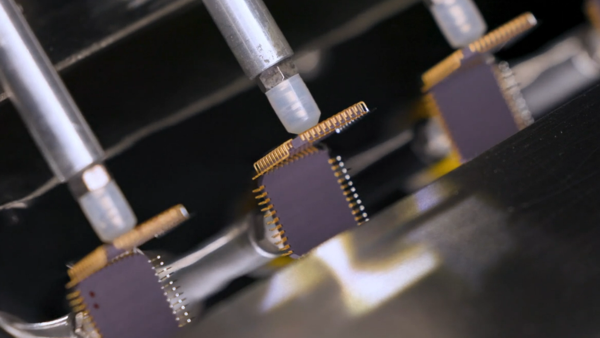
A key part of our capability is robotic hot solder dip processing. With six robotic hot solder dip machines, we can efficiently remove existing solder balls and prepare BGA components for new sphere attach using a controlled, repeatable process. Combined with custom-fabricated reball fixtures, several multi-zone reflow ovens, and experienced technicians, this capability allows us to handle both small and large production quantities while maintaining consistent process control.
From initial solder removal and component preparation through ball attachment and final verification, we provide a complete BGA reballing process designed to meet demanding quality and reliability requirements.
Key Highlights
- Six robotic hot solder dip systems for controlled, repeatable solder ball removal and component preparation
- Strict adherence to IPC and JEDEC standards
- Proven, repeatable processes trusted worldwide
- Multi-zone reflow ovens to meet industry specifications
- Precision custom tooling used
- Comprehensive verification, including shear testing, XRF alloy checks, visual, and X-ray inspection if required
- Expertise across BGA, LGA, and QFN devices
- Skilled engineering and operator team ensuring precision and efficiency
- Trusted by global clients for critical rework needs
Technical Specifications
- Capable of reballing BGAs with 0.4 mm pitch and larger
- Ball-attach services available for LGA and QFN packages
- Conformance to J-STD-001, GEIA-STD-0006, IEC TS 62647-4, and IPC 7711/7721
- Post-reball verification and inspection options, including shear testing, XRF, alloy verification, visual Inspection, X-ray inspection, and component marking when required
- Reball fixtures are custom-designed and machined
- Two inline Heller reflow ovens and 8 Martin Reball Mini-Ovens
Compliance / References
- 9.4.1 BGA Component Reballing, Braid Ball Removal, Mini-Oven Attachment Method
- 9.4.2 BGA Component Reballing, Braid Ball Removal, Reflow Oven Attachment Method
- 9.4.3 BGA Component Reballing, Robotic Ball Removal, Mini-Oven Attachment Method
- 9.4.4 BGA Component Reballing, Robotic Ball Removal, Reflow Oven Attachment Method
- 9.5.1 BGA Component Removal, Machining Method
- GEIA-STD-0006 Requirements for Using Robotic Hot Solder Dip to Replace the Finish on Electronic Piece Parts
- IPC 7711/7721 Rework, Modification, and Repair of Electronic Assemblies
- IPC-JEDEC-J-STD-033 Handling, Packing, Shipping and Use of Moisture, Reflow, and Process Sensitive Devices
- IPC-JEDEC-J-STD-020 Moisture/Reflow Sensitivity Classification for Nonhermetic Surface Mount Devices
- IPC-J-STD-002 Solderability Tests for Component Leads, terminations, Lugs, Terminals and Wires
- IPC-J-STD-004 Requirement for Soldering Fluxes
- IPC J-STD-006 Requirements for Electronic Grade Solder Alloys and Fluxed and Non-Fluxed Solid Solders for Electronic Soldering Applications
- IPC-7095 Design and Assembly Process Implementation for BGAs
- IPC-7525 Stencil Design Guidelines (Solder Paste)
- IEC TS 62647-4 Process management for avionics - Aerospace and defense electronic systems containing lead-free solder
- J-STD-001 Requirements for Soldered Electrical and Electronic Assemblies
- JEDEC J-STD-020 Moisture/Reflow Sensitivity Classification
- JESD625C.01 Requirements for Handling Electrostatic-Discharge-Sensitive (ESDS) Devices
- JESD22-B101 External Visual Standard
- MIL-STD-202 Test Method Standard Electronic and Electrical Component Parts
- MIL-STD-750 Department of Defense Test Method Standard Microcircuits
- MIL-STD-883 Department of Defense Test Method Standard Microcircuits
Images
Figure 1. BGA components come in all sizes, and newer AI BGA chips can be very large.