X-Ray System Eye Opener
Upgrading to a modern angled beam X-ray delivers clearer defect views, better measurement, and superior imaging for voids and BGAs compared to legacy 2D systems.
REQUEST FOR QUOTE BLOGS INDEX


|
|
22 Parkridge Road Haverhill, MA 01835 USA www.circuitrework.com |
Some time ago, we were fortunate enough to acquire a Dage X-ray machine. We used an older machine that had been a reliable workhorse for years. Since we loved our old machine, we didn't immediately recognize what the Dage machine could do for us, but when we saw how it performed, all we could say was, "What an eye-opener!"
The Dage X-ray systems are a new breed of 2D machines that can rotate the beam receiving head, making the Dage more like a two-and-a-half D machine. Take a look at the following images.
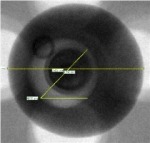
Figure 1 is from the old X-ray machine, and Figure 2 is from the Dage machine. In both images, a sizable void is visible in the ball. However, with the new machine, we can obtain a clearer view of the void's characteristics, including its size, location, and extent.
In Figure 3, we tilted the board in the older machine to see if we could duplicate the view of the Dage, and as you can see, it doesn't come close. The angling of the head in the Dage provides perspective on the ball and void that is just not available in the older machine.
Additionally, it is hard not to notice the clarity of the image, which is part of the reason we can magnify the image without distortion.
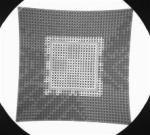
Frequently, customers ask us to take a backed-off X-ray image of a BGA component to record the component's appearance after assembly. In Figure 4, you can see the distortion at the edges of a 42.5 MM component in the picture taken with the old machine.
On the other hand, as shown in Figure 5, the component maintains its form in the photo. Further, the Dage pictures maintain their clarity when the customer zooms in to examine specific features in practice.
Another nice feature of the new machine is the ease of measurement. A somewhat laborious calibration was required on the old machine before accurate measurement. On the Dage, it's measured at will. In the case of the void we focused on earlier, you can get a quick view of the size of this void relative to the size of the overall ball in a heartbeat. See Figure 6.
We have yet to explore all the extensive capabilities of this new machine. There are measurement and comparison routines for ball, through-hole, and void measurements, as well as other automatic features that we have not yet fully appreciated. But as you can see from the images above, we are already reaping the benefits of the upgraded technology.
There are several machines. If you search the internet, you will find various reputable companies. We have the Dage that provides this angled type of viewing, and we are quite enthusiastic about the advantages these new machines provide. If you want to improve your view of X-ray images from the traditional straight-shot 2D imager, we highly recommend considering this type of machine.