| 2.3.6 Coating Removal, Micro Blasting Method |
|
Printed Board Type: R/F/W/C
Skill Level: Expert
Conformance Level: High
Revision: D
Revision Date: Jan 5, 1998
 |
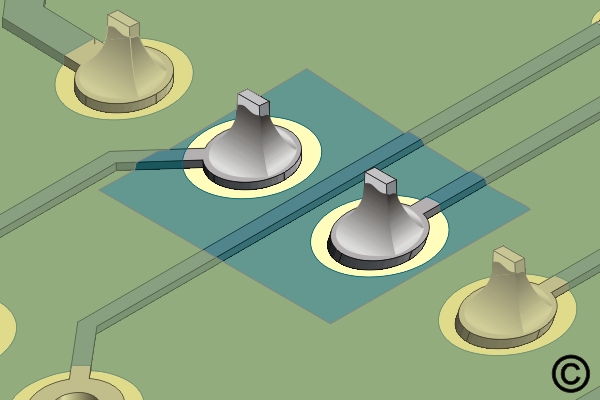
| Coating Removal Required At Outlined Area |
|
OUTLINE
This coating removal method uses a micro abrasive blasting system and a very fine soft abrasive powder. The powder is propelled through a small nozzle toward the area where the coating needs to be removed.
To determine the appropriate coating removal procedure the coating must first be identified. Refer to procedure number 2.3.1.
CAUTION
Micro blasting will generate substantial static charges. The work area should be flooded with ionized air and the circuit board assembly should be grounded whenever possible.
 |
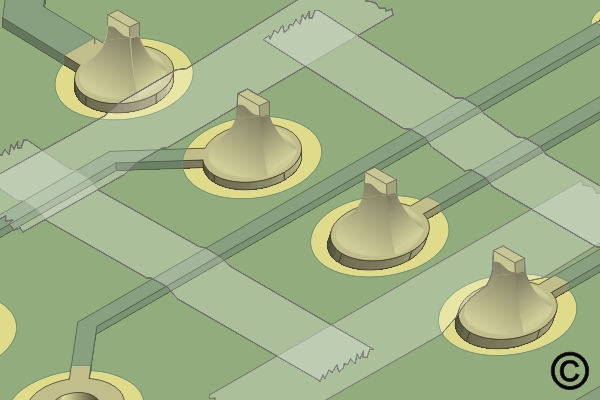
| Figure 1: Apply Kapton tape to outline area for coating removal |
|
TOOLS & MATERIALS
Abrasive Powder
Micro Blasting System
Masking Tape
PROCEDURE
- Clean the area.
- Select the appropriate abrasive blasting powder and nozzle size. Set the air pressure at the desired setting per equipment manufacturer's instructions.
-
 |
| Figure 2: Remove coating using micro blasting system |
|
Apply masking tape or other masking material to protect the circuit board surface as needed. (See Figure 1). Masking materials can consist of tapes, curable liquid masks or reusable stencils.
- If the circuit board has static sensitive components, insert the entire circuit board into a shielded bag. Only the area needing rework should be exposed. Ground the circuit board to dissipate static charges
- Insert the circuit board into the blasting chamber and blast away the damaged or unwanted coating\solder mask. Slowly move the nozzle along the area where the coating is to be removed. (See Fig 2).
-
 |
| Figure 3: Removal complete. |
|
Blow off the blasting dust and clean the area
EVALUATION
- Visual examination or UV light may be used to verify complete removal of coating.