Background
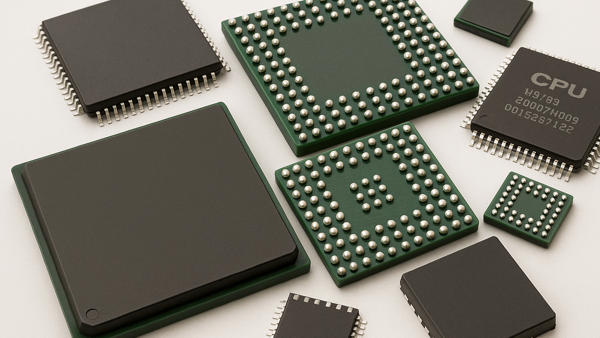
A leading electronics manufacturer was faced with a costly and increasingly common problem: a large volume of assembled circuit boards, valued at several hundred thousand dollars, had become unusable due to design revisions and component obsolescence. While the assemblies themselves could not be deployed, many of the embedded components, including high-value BGAs, QFPs, and connectors, remained fully functional.
Rather than scrapping the assemblies and absorbing the loss, the organization implemented a structured component reclamation strategy to recover reusable parts, reduce procurement costs, and mitigate supply chain risk.
Challenge
The core question was not simply whether components could be removed, but whether they could be reused with the same reliability and performance as new parts.
Many devices were moisture-sensitive and had already undergone prior thermal cycles during original assembly. Improper removal or handling could result in defects such as delamination, cracked packages, or degraded solderability. In addition, any reclaimed components needed to meet strict industry standards and be fully accepted within existing quality systems, particularly critical for high-reliability applications in aerospace, defense, and medical sectors.
Approach
The process began with a detailed feasibility assessment. Engineers evaluated each assembly for environmental exposure, moisture sensitivity level (MSL), and overall condition to determine suitability for reclamation.
This step proved essential, as even minor contamination or improper storage history can significantly impact success rates. By screening components early, the organization avoided unnecessary processing of unsuitable parts, protecting both yield and cost efficiency.
All activities were aligned with IPC and JEDEC guidelines to ensure compliance with high-reliability requirements.
Controlled Component Removal
Approved assemblies underwent controlled disassembly followed by precision component removal using programmable hot gas rework systems.
Technicians adhered to tightly controlled thermal profiles to minimize stress:
- Convection-based heating was used for complex packages such as BGAs
- Conduction techniques were applied for smaller components
This approach preserved component integrity while preventing damage to sensitive internal structures.
Reconditioning and Restoration
Following removal, components entered a comprehensive reconditioning phase.
- Leads and terminations were restored using robotic hot solder dip (RHSD) systems to remove oxidation and ensure solderability compliance
- BGA devices underwent full reballing, including removal of existing solder spheres, cleaning of the component underside, and application of new solder balls
These processes restored components to a condition suitable for reintroduction into modern assembly environments.
Moisture Control and Cleaning
All components were thoroughly cleaned to remove flux residues and contaminants. Components were then baked according to MSL requirements to eliminate absorbed moisture.
This ensured safe handling and prevented failures such as popcorning or internal damage during subsequent reflow operations.
Verification and Quality Assurance
Each reclaimed component underwent rigorous inspection and testing prior to reuse:
- Visual inspection confirmed physical integrity
- Dimensional verification ensured coplanarity and proper lead geometry
- Solderability testing, performed in accordance with IPC-J-STD-002, validated reliable wetting performance
Results
The reclamation initiative delivered measurable financial and operational benefits.
Processing times and costs were predictable based on component type:
- Simple chip components: ~8 minutes per unit at approximately $14
- Large BGAs (>100 balls): ~35 minutes per unit at approximately $61
In many cases, reclamation costs represented a fraction of replacement cost—especially for obsolete or long-lead-time components. The organization recovered a significant percentage of high-value parts from assemblies that would have otherwise been scrapped, converting potential losses into usable inventory.
In addition to cost savings, the initiative reduced dependency on constrained supply chains and improved production continuity by ensuring availability of critical components.
Environmental Impact
In addition to operational benefits, the initiative supported the organization’s sustainability objectives.
Semiconductor manufacturing is highly resource-intensive, often requiring between 1,500 and 2,500 kWh of energy per wafer. By reclaiming and reusing existing components, the company avoided the environmental impact associated with new fabrication.
This approach supports a circular manufacturing model, reducing electronic waste while maximizing the lifecycle value of existing materials and components.
Conclusion
This case confirms that component reclamation is not a last-resort option—it is a controlled, standards-driven process that delivers measurable economic and operational value.
By implementing a repeatable, IPC-aligned reclamation strategy, the organization transformed non-functional assemblies into a valuable resource. The result was improved cost efficiency, enhanced supply chain resilience, and a meaningful contribution to sustainability goals, demonstrating that reclaimed components can meet the rigorous demands of high-reliability production environments.
Several members of the Circuit Technology Center team contributed to this technical paper. Images may be altered or recreated to protect proprietary information.