| September 20, 2011
|
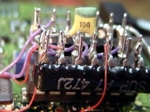
This is an example of a project where the solution was more reliable, less labor intensive and much more elegant that the alternative... dead bugging. If you're not familiar with dead bugging it's when you need to add components to a circuit board and have no place to put them so you glue them upside-down and run jumper wires to complete the circuits. It's usually a big mess.
A military contractor had an engineering change to implement to a batch of circuit board that involves the addition of 16 components. The original solution was to dead-bug the components and adding 30 jumper wires to some lifted component leads and surface pads ...
|
In the world of rework and repair there can never be a standard procedure for every emergency. Things can happen quickly, and there can be an urgent need to go above and beyond the recognized standards outlined in IPC and other industry guides.
These kinds of situations demand innovation, new processes. Through the years we've had many occasions to work closely with our customers and partners to create leading-edge solutions.
In this example we developed a procedure to repair large ground plane voids. We worked hand-in-hand with a customer who provided critical reliability data for the completed repair that confirmed the repair process was sound ...
|
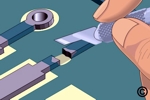
Performing ECO cuts on external and internal connections can be simple, or extremely complex.
Quite often, a rework department is confronted with the task of cutting, rather than establishing, connections. Often called conductor cuts or circuit cuts, such procedures involve breaking connections both on the surface of the circuit board as well as internally.
Why do these cuts need to be made? Why do connections on or in boards need to be severed? Design changes drive these types of procedures that may, for example, make the function of a circuit assembly more efficient ...
|
|
|
|
|
Trivia
See the answer below.
|
Quote of the Week
|
|
|