| May 24, 2011
|
Quickly removing and replacing a large multi-pin connector seems a daunting task, but it really isn't. Here's how it can be done.
The solution, and likely the best method, is to reflow all the solder joints at once using a solder fountain system. This enables you to remove and replace the connector in two quick operations.
A solder fountain system generates significant heat, with molten solder in direct contact with the board. This is what a high-mass object like a connector needs. However, it's important that the dwell over the molten solder be as brief as possible. The number of times that the connections are reflowed should be ...
|
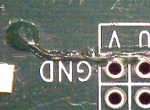
It may is not clear in the photo, but a row of plated holes should have been connected to ground. They were not connected to each other, or to ground.
It would seem easy enough to find a ground point and connect the pins using a wire once the board was populated, but a surface wire was unacceptable.
A connection was needed at the bare board level. This new connection needed to be reliable without impacting the plated through holes ...
|
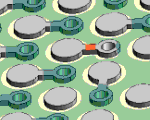
Solder mask has one primary purpose at a BGA site, and that is to isolate solder wetting to a specific area, e.g., the BGA pad, so that a good solder joint will be formed.
Solder mask usually covers the conductor extending from the BGA pad to a via or plated hole. Sometimes the track and hole are completely masked; sometimes there is only a thin "dam" of mask between the pad area and exposed track and hole.
This dam or masking is delicate and easily damaged or dislodged during rework. If it isn't repaired, the result often more rework, or rework upon rework ...
|
|
|
|
|
Trivia
See the answer below.
|
Quote of the Week
|
|
|