6.2.1 Jumper Wires, BGA Components, Circuit Track Method

Printed Board Type: R/F
Skill Level: Expert
Conformance Level: Medium
Revision: B
Revision Date: Jul 7, 2000

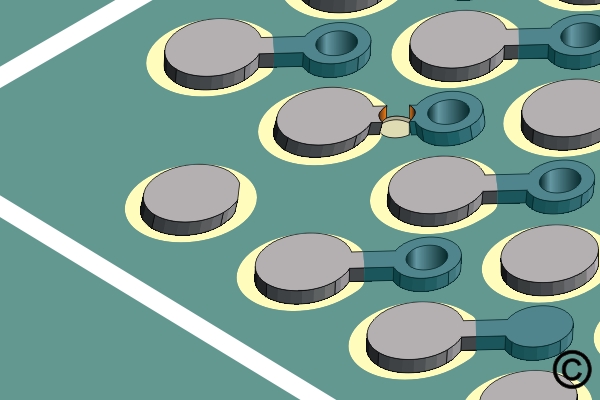
Figure 1: Cut the connection to the via using a Precision Drill System.
OUTLINE
This method is used to change a circuit path at a BGA site for engineering changes or modifications.


NOTE

This procedure requires precision milling equipment and highly trained technicians.


CAUTION

This procedure is not applicable for "via in pad" applications.


ACCEPTABILITY REFERENCES
IPC-A-600 2.0 Externally Observable Characteristics
IPC-A-610 11.0 Discrete Wiring
       
PROCEDURE REFERENCE
2.1 Handling Electronic Assemblies
2.2 Cleaning
2.5 Baking and Preheating
2.7 Epoxy Mixing and Handling
4.2.1 Conductor Repair, Foil Jumper, Epoxy Method
4.7.3 Surface Mount, BGA Pad Repair, Film Adhesive Method.
6.1 Jumper Wires
9.2.1 BGA Component Profile Development, Standard
9.2.2 BGA Component Profile Development, Smart Track
9.3.1 BGA Rework
IPC7721 6.2.1 Jumper Wires, BGA Components, Circuit Track Method


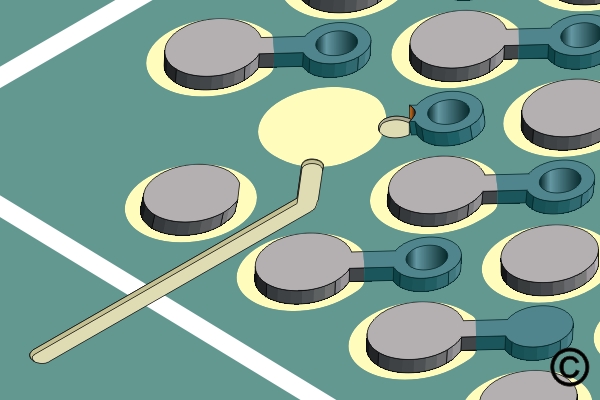
Figure 2: Remove the BGA pad and mill a shallow channel into the solder mask surface.
TOOLS & MATERIALS
BGA Pad Repair Kit
Bonding Iron
Bonding Tips
Bonding System
Circuit Frames, BGA Pads
Circuit Tracks
Cleaner
End Mills
Epoxy
Flux, Liquid
Heat Lamp
Knife
Microscope
Milling System
Oven
Precision Drill System
Scraper
Solder
Soldering Iron
Tape, Kapton
Tweezers
Wipes


PROCEDURE

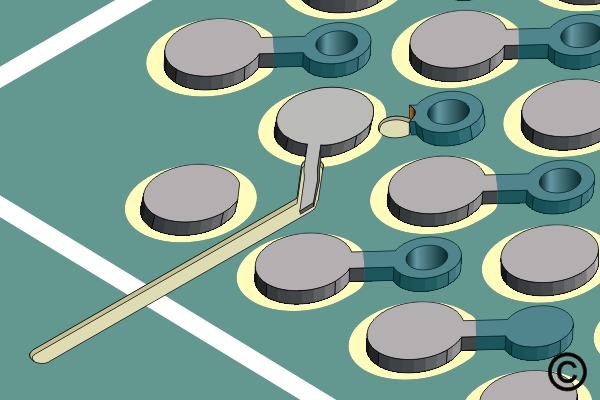
  1. Figure 3: Bond a new BGA pad in place.
    Clean the area.

  2. Remove the BGA component if installed, remove excess solder from the pads, and clean and inspect the site using standard BGA rework equipment.

  3. Cut the short conductor (dog bone) connecting the BGA pad to the connecting via using a Precision Drill System or milling machine and appropriate size end mill. (See Figure 1 and 6).

  4. Remove the existing BGA pad. Apply heat from a soldering iron if needed. (See Figure 2)

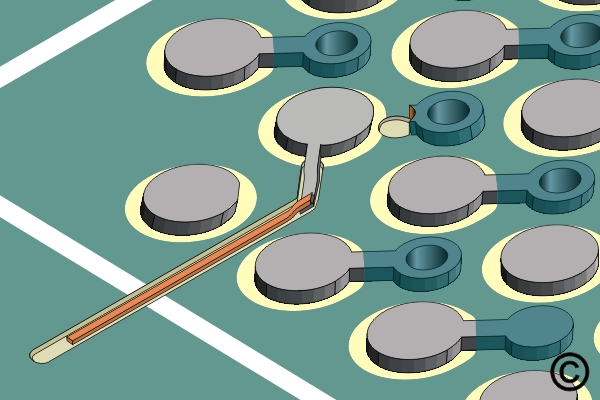
  5. Figure 4: Solder a copper circuit track to the tail extending from the new BGA pad
    Use a milling machine to mill a shallow groove in the board surface from the BGA pad area to the perimeter of the BGA site. Tight spacing may restrict the width of the channel to 0.25 mm (.010") or less. Use a carbide end mill approximately0.050 mm (.002") wider than the new connecting circuit. (See Figure 3).

  6. Bond a replacement BGA pad in place using a bonding system. (See Procedure 4.7.3). The new BGA pad must have a tail that will align with the circuit track to be added next. (See Figure 4).

  7. Select a Circuit Track to match the width and thickness of the circuit to be replaced. Cut a length approximately as needed. The Circuit Track should overlap the BGA tail section a minimum of 2 times the circuit width.

  8. Figure 5: Solder a wire to the Circuit Track and overcoat with epoxy.
    Gently abrade the top and bottom of the new Circuit Track with the buffer to remove any oxidation and clean.


    NOTE

    If needed, the ends of the Circuit Track may be tinned with solder prior to lap soldering in place. 

  9. Position this new Circuit Track along the milled groove. The Circuit Track should overlap the existing circuit a minimum of 2 times the circuit width. (See Figure 4).

  10. Apply a small amount of liquid flux to the overlap joint.

  11. Lap solder the Circuit Track to the BGA tail section using solder and a soldering iron. Make sure the new circuit is properly aligned.

  12. Figure 6: Precision Drill System used to cut the connection from the BGA pad to the via.
    Solder one end of a fine gauge wire to the end of the extending circuit. (The opposite end of the wire will be soldered later.) (See Figure 5).

  13. Clean the area.

  14. Mix epoxy. If desired, add color agent to the mixed epoxy to match the circuit board color.

  15. Coat the top and sides of the replaced circuit with epoxy. The epoxy bonds the new circuit to the base board material and insulates the circuit. (See Figure 5).

  16. Cure the epoxy per Procedure 2.7 Epoxy Mixing and Handling.

    CAUTION
    Some components may be sensitive to high temperature.

  17. Clean the board as required.

  18. Install new BGA per applicable procedures.

  19. Route and terminate the other end of the jumper wire.

EVALUATION

  1. Visual examination for alignment and overlap of new circuit.

  2. Visual examination of epoxy coating for texture and color match.

  3. Electrical tests as applicable.

Free Newsletter
The most valuable tool in your repair department is high quality information. Get a subscription to Circuit Rework News.


Customer Comments

"We had never considered sending our rework projects until recently. The cost savings since we started using Circuit Technology Center has been significant. I hope we never have such a massive rework project again, but if we, do you'll be the first to get a call"
N.C. Fort Wayne, IN USA


Send us your comments