| November 27, 2012
|
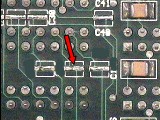
It's a wonder pad to part size mismatch doesn't happen more often, considering the thousands and thousands of opportunities on assemblies.
When it does happen, it's a big problem. Try as hard as we might to read a solution into the IPC specs, it's not always simple. Through the artwork design phase of this circuit board there was an error in the pad layout. What should have been two individual pads for a 1206 chip component, ended up being a single elongated pad.
If the pad was the proper width, the fix would have been relatively simple; just create a small separation in the middle of the two ends. Unfortunately the single pad was too narrow ...
|
Can you fix a broken corner on a circuit board reliably? Do you consider re-balling BGA components to be a reliable procedure? Should you attempt to repair a damaged plated hole with an inner layer connection?
Your opinion and experiences with issues such as these are important, since the reliability of most circuit board repair and rework procedures are a matter of industry consensus. So, how do you know if a rework procedure will produce a reliable result?
Most rely on a concept and term known as conformance level. The IPC defines conformance level as an indicator of how closely the repaired or reworked circuit board will be to the original specification - the board or assembly as it would be without damage or defect, and prior to rework.
Conformance level has a direct bearing on reliability, and is a grading system for procedures established from industry consensus, opinion and experience. Three basic levels of conformance are applied to the end result for every rework or repair ...
|
Solder mask has one primary purpose at a BGA site, and that is to isolate solder from wetting to specific areas, e.g., the BGA pad, so that a good solder joint will be formed.
Solder mask usually isolates the pad from the conductor, or from the track leading to a via or plated hole. Sometimes the track and hole are completely masked; sometimes there is only a thin "dam" of mask between the pad area and exposed track and hole. This dam or masking is delicate and easily damaged or dislodged during rework. If it isn't repaired, the result is often more rework, or rework upon rework!
Once a BGA device is removed from a site, that site must be prepared before the replacement process. Preparing usually involves removing residual solder from the BGA pads on the circuit board, typically done with a soldering iron and copper braid solder wicking material. Then the rework area is ...
|
|
|
|
|
Trivia
See the answer below.
|
Quote of the Week
|
|
|